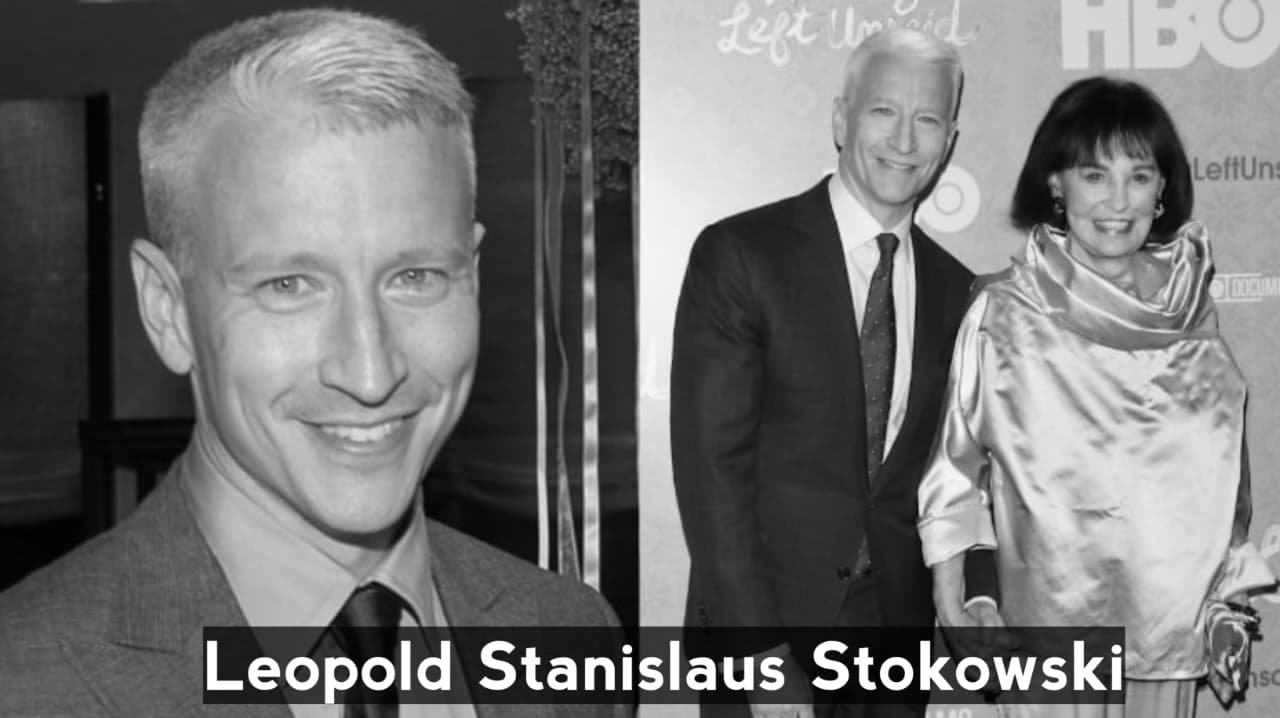
Classical music has seen many great conductors, but few have transformed the very sound and perception of orchestral music like Leopold Stanislaus Stokowski. Known for his innovative techniques, dramatic presence, and fearless embrace of modern compositions, he reshaped the American symphonic landscape and brought classical music to audiences around the world. From the legendary Philadelphia Orchestra to the groundbreaking collaboration with Walt Disney’s Fantasia, Stokowski’s influence continues to resonate more than four decades after his passing.
Personal Information
| Detail | Information |
|---|---|
| Full Name | Leopold Stanislaus Stokowski |
| Date of Birth | April 18, 1882 |
| Place of Birth | London, England |
| Date of Death | September 13, 1977 |
| Place of Death | Nether Wallop, Hampshire, England |
| Nationality | British-born American |
| Occupation | Conductor, Orchestral Innovator |
| Famous For | Philadelphia Orchestra, Disney’s Fantasia, championing modern composers |
| Marriages | Evangeline Love Brewster Johnson (1909–1915), Olga Samaroff (1916–1923), Gloria Vanderbilt (1945–1955) |
| Children | 1 son (Christopher Stokowski) |
| Notable Achievements | Philadelphia Sound, pioneering free bowing, extensive recordings, promoting contemporary music |
Family Background and Early Influences
Leopold was born into a Polish heritage family in London. His father, Stanislaus Stokowski, was a civil servant, and his mother, Mary Kubala, cultivated a home where culture and education were highly valued. Though neither parent was a professional musician, they recognized Leopold’s extraordinary musical aptitude early and encouraged piano and organ lessons.
The cultural milieu of late 19th-century London exposed him to concerts, organ recitals, and symphonic performances that deeply influenced his musical sensibilities. His upbringing combined discipline with artistic freedom, fostering creativity and the independence that would later define his orchestral innovations.
Early Life and Education
Leopold’s formal training began at the Royal College of Music, where he studied organ, composition, and theory, and continued at Queen’s College, Oxford, deepening his understanding of European musical traditions.
Before venturing into orchestral conducting, he worked as an organist and choir director, honing his skills in harmony, tone control, and ensemble leadership. These formative experiences provided the technical foundation and artistic sensitivity that characterized his later orchestral work.
Breaking into Orchestral Conducting
Stokowski’s first major conducting post was with the Cincinnati Symphony Orchestra in 1909. Here, his natural leadership and unique interpretive style quickly drew attention.
In 1912, he became music director of the Philadelphia Orchestra, a position that would define his career. Over two decades, he transformed the ensemble into one of the most revered orchestras worldwide, establishing the Philadelphia Sound and setting new standards in orchestral performance.
The Philadelphia Sound — Innovation in Action
The Philadelphia Sound was distinguished by lush strings, precise articulation, and a warmth of tone that was revolutionary at the time. Stokowski introduced free bowing in the string sections, allowing musicians to interpret bow movement independently, producing a deeper, more resonant sound.
He also reconfigured orchestral seating and experimented with stage acoustics, ensuring the audience experienced maximum clarity and richness. These techniques positioned Philadelphia as a world-class orchestra and influenced orchestras across the globe.
Conductor Without a Baton
Unlike many contemporaries, Stokowski often conducted without a baton, using expressive hand gestures to guide the orchestra. This allowed for greater fluidity and emotional nuance, and his theatrical presence made concerts visually captivating as well as musically inspiring.
His expressive gestures, combined with his insistence on tonal perfection, gave musicians unprecedented freedom and audiences an unforgettable experience.
Championing Modern Music
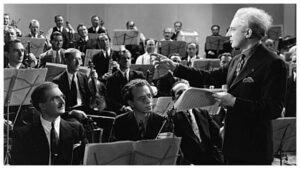
His advocacy helped modern orchestral music gain legitimacy and expanded the American musical landscape. Through these efforts, he encouraged other conductors to innovate and embrace new sounds.
Cinematic Legacy — Fantasia
In 1940, Stokowski collaborated with Walt Disney on Fantasia, conducting an orchestra for sequences including Bach’s Toccata and Fugue in D Minor and Stravinsky’s The Rite of Spring. The film introduced orchestral music to millions and showcased Stokowski’s vision of music as a multimedia art form.
Fantasia remains a landmark in cultural history, blending animation and music in a way that both educated and entertained audiences worldwide.
Later Career and Global Influence
After leaving Philadelphia, Stokowski continued to shape orchestras worldwide:
-
NBC Symphony Orchestra – collaborating with Toscanini
-
New York Philharmonic – co-conductor
-
Houston Symphony Orchestra – raising performance standards
-
American Symphony Orchestra – founded in 1962 to continue his vision
Through these roles, he influenced generations of musicians and established a lasting global legacy.
Recording Innovations
Stokowski was a pioneer in recording technology, understanding its potential to preserve performances and reach larger audiences. He experimented with microphone placement, stereo recording, and sound mixing, capturing orchestral nuances with unprecedented clarity.
His recordings remain reference points for orchestral interpretation and historical study, showcasing the depth and richness of his signature style.
Leopold Stanislaus Stokowski — Personal Life and Marriages
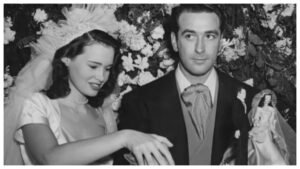
-
Evangeline Love Brewster Johnson (1909–1915)
-
Olga Samaroff (1916–1923) – a renowned pianist and mentor
-
Gloria Vanderbilt (1945–1955) – socialite and cultural figure
He had one son, Christopher Stokowski, and his personal life was intertwined with prominent artistic and social circles. His relationships influenced both his professional collaborations and public persona, reinforcing his reputation as a charismatic and adventurous figure.
Comparisons with Contemporaries
Compared to conductors like Arturo Toscanini or Serge Koussevitzky, Stokowski’s style was far more experimental and expressive. While Toscanini emphasized strict adherence to scores and Koussevitzky focused on structural clarity, Stokowski prioritized tone, color, and emotional resonance, creating orchestral experiences that were as vivid visually as they were aurally.
Criticism and Controversies
Stokowski faced criticism for his dramatic style and orchestral modifications. Some traditionalists argued that his interpretations deviated too far from composers’ intentions.
Yet, these bold choices were the very reason he transformed orchestral performance, inspiring later generations of conductors to experiment, innovate, and engage audiences emotionally.
Legacy and Influence
Stokowski’s influence is vast:
| Area | Impact |
|---|---|
| Orchestral Sound | Introduced lush strings, free bowing, and rich tonal color |
| Modern Repertoire | Premiered works by Stravinsky, Copland, Varèse, and Ives |
| Recording Industry | Advanced stereo and high-fidelity orchestral recordings |
| Education & Inspiration | Mentored future conductors and set new artistic standards |
His legacy demonstrates that music thrives when innovation meets passion, ensuring orchestral art remains relevant across generations.
Conclusion
Leopold Stanislaus Stokowski was more than a conductor — he was a visionary who redefined orchestral music. From the Philadelphia Sound to Fantasia, his innovations in technique, repertoire, and performance continue to shape the world of classical music. Studying his life offers lessons in creativity, bold experimentation, and the transformative power of music. Click here for more information.